The One-Story Trap in Local Memory
The one-story trap in local memory turns a vivid anecdote into the only account. Learn how to shape a clear display while keeping different experiences in view.
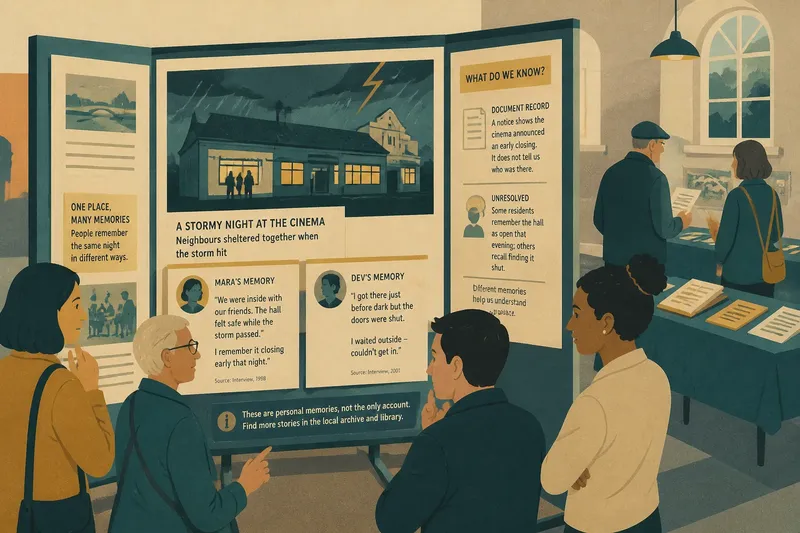
At the community hall, visitors gather around a display about the old cinema. Its central panel tells of neighbours sheltering together during a storm. One resident remembers the cinema closing early that night; another recalls waiting outside, unable to get in. The one-story trap in local memory appears when the display makes one recollection stand for everyone.
A shared story can help people recognise a place. The challenge is to make it a useful entrance rather than a verdict on what happened. Choose a form that suits the space, then give readers a clear way to see what the story includes and what it leaves out.
Why does one local memory become the main story?
Anecdotes with a striking event and a tidy ending are easy to repeat. A story about neighbours helping during a flood may travel further than accounts of damp homes, missed work or disputes over who needed help first.
Public retellings can also shape the words people use later. A version printed on a noticeboard or included in a walking-tour leaflet may become familiar, even to people whose own memories differ. Familiarity is not proof that every detail is shared.
Before drafting, ask what the central story helps a visitor understand about the place. A cinema anecdote might explain how the hall served as a meeting point. It need not also claim that everyone was there, or that everyone experienced the event in the same way.
Which format fits a display about differing memories?
When does one anchor story work?
Use one recollection to give visitors a concise starting point, especially on a small sign. Introduce it as one person’s memory and direct readers to other accounts nearby or in the local archive.
When should accounts sit side by side?
Place contrasting recollections together when their differences are part of the subject. A library display can, for instance, show how people in different parts of a street experienced the same event.
When is a timeline useful?
Choose a timeline when accounts differ about sequence or duration. Keep each remembered detail attached to its speaker rather than merging separate recollections into one smooth chronology.
What can a short panel leave out?
A brief panel cannot carry every account, but it can state that the story is selected and point to a fuller collection. Cut background detail before cutting a qualification that changes what a speaker meant.
How can you shape the account without flattening it?
First, define the display’s purpose in one sentence. Then choose the story and details that serve that purpose. Keep the speaker’s position in view: where they were, what they could observe and what mattered to them.
Use direct quotations only when you have permission to publish them. If you paraphrase, do not turn uncertainty into certainty: “I think it was near closing time” should not become “It happened at closing time”. Keep a source note with each extract so you can check its wording during editing.
Give documentary records a different role from personal recollections. A dated notice might establish that the cinema announced a closure; it cannot, on its own, tell readers what people saw or felt. Name the source when a detail matters, and avoid presenting a document as a correction to someone’s experience.
When accounts conflict, state the difference in plain language. For example: “Some residents remember the hall as open that evening; others recall finding it shut.” If the available material cannot settle the matter, leave it unresolved.
What should you check before choosing a format?
- Space: Check the sign’s available room. If it can hold only a brief account, use one bounded recollection and point to a fuller source; if it can hold more, consider placing contrasting voices together.
- Purpose: Check what a visitor should understand about the place. If one anecdote explains that purpose, use it as an entry point; if it hides a central disagreement, give the differing accounts space.
- Source detail: Check whether each quotation or paraphrase has a speaker and source note. If either is missing, verify it before publication; if you cannot, omit the detail or describe the gap clearly.
- Sequence: Check whether accounts disagree about what happened when. If order matters, use a timeline with each recollection kept separate; if it does not, group the accounts by viewpoint or theme.
- Reader access: Check whether visitors can find the longer record. If a library catalogue, archive page or nearby display is available, give its name or location; if not, state that the panel presents selected memories.
- Consent and anonymity: Check the agreed terms for each account before including identifying details. If a speaker asked to remain anonymous or did not consent to publication, follow the archive’s agreed process and leave out material that cannot be shared.
Say you are preparing a small display about a riverside footbridge. Imagine your notes contain two invented accounts: Mara, who remembers jumping from the bridge with friends in summer, and Dev, who remembers avoiding it after dark because the boards felt unsafe. You decide the panel should show how people experienced the same crossing differently. You put Mara’s recollection beside Dev’s, identify each as a personal memory, and retain the details about season and time of day. The resulting display presents pleasure and unease without claiming that either account describes every visitor.
How should a display handle a difficult difference?
Should a document replace a conflicting recollection?
No. State what the document records and what the speaker remembers, keeping each claim attached to its source. If the document establishes an official date, that does not settle what the event felt like to someone present.
How many memories should a short display include?
Include the accounts needed to show the relevant difference, not a fixed number. If space is tight, say that the panel presents selected memories and direct visitors to the wider collection.
Can one recurring story still lead the display?
Yes. Describe it as a recurring account and say what it helps explain about the place. Avoid presenting it as universal unless the material supports that claim.
What if nobody can settle what happened?
Leave the point open and describe the available accounts without ranking them by confidence or vividness. A display can still explain why the disagreement matters to the place’s story.
How can the finished story remain clear?
Read the panel aloud and listen for claims that reach beyond the accounts, such as “everyone remembers” or “the whole neighbourhood”. Narrow those phrases when the material does not support them. Then check that a visitor can distinguish the shared setting from the different experiences within it.
The one-story trap in local memory is easier to avoid when a display gives its central anecdote a clear job: it can open a conversation about a place without closing off what its residents remember differently. Leave readers with a route to the fuller record, and the panel can be concise without pretending to be complete.