How to Read a Building Plaque and Map Together
Learn how to read a building plaque and map together, connect an inscription to its setting, and keep visible clues distinct from unanswered questions.
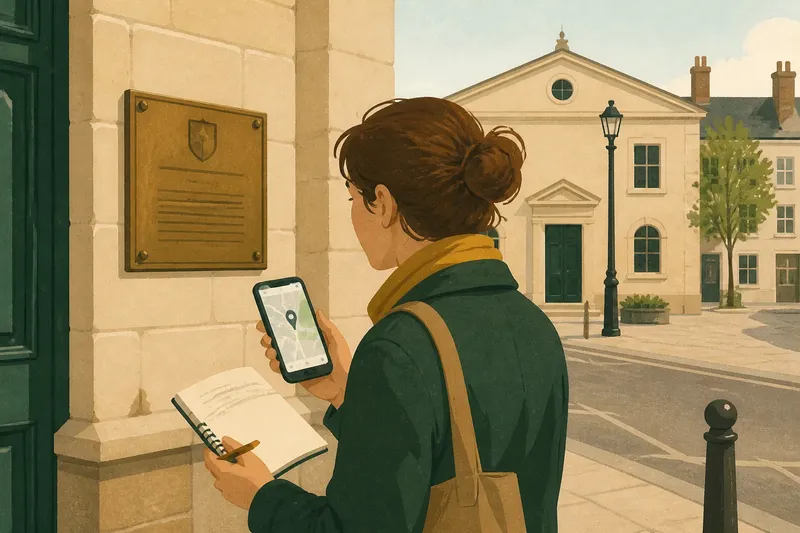
You stop outside an old hall to read a brass plaque, then open your phone’s map to find the square across the road. Reading a building plaque and map together gives you two useful views: what someone chose to commemorate and how the building sits among nearby streets and spaces.
Keep the task narrow. The plaque records a claim in its own words; the map shows a spatial arrangement. Neither tells you everything about the building, but together they can help you ask a more precise question about its setting.
What does the plaque actually say?
Read the inscription before drawing conclusions. Note the exact name, date and verbs. “Lived”, “worked”, “met” and “opened” describe different connections, while a name alone may not tell you whether the person was a resident, donor, architect or member of an organisation.
Look at the plaque’s position, too. Record whether it is beside the main entrance, on a side wall or near another feature. That is a visible detail; it does not, by itself, explain why the plaque was put there.
Notice the material and the surrounding façade without trying to date changes by appearance alone. A blocked doorway or newer-looking stonework may prompt a question, but an inscription or reliable local record is needed to establish when or why a change happened.
Which map helps answer your question?
Use a current street map to locate the building, its approaches and nearby public spaces. A historic map can help you compare an earlier street pattern or building outline with what is visible now. Check the map’s date, legend and coverage before relying on it: symbols and place names can change, and a drawn outline does not explain how a building was used.
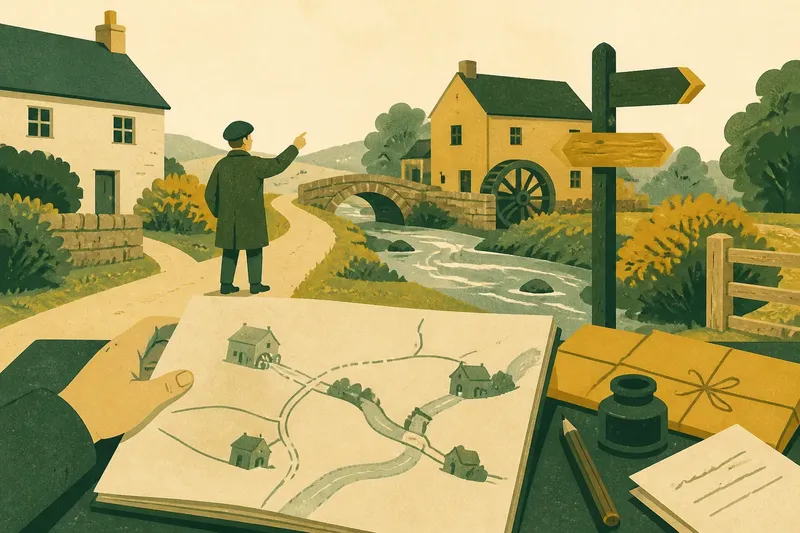
Switch between close and broad views. A detailed plan can show the hall beside adjoining plots or a junction. A wider view can place it in relation to a market area, river crossing or station. These are different scales of context, not competing versions of the building’s story.
Use the map to widen the frame, not to assign actions to people. It can show that a hall faced a square or stood near several lanes. It cannot establish who used those routes, which entrance they chose or what they did inside.
How do you read a building plaque and map together?
Choose one link between the sources. If the plaque describes a hall as a meeting place, compare the entrances and public approaches visible on the map. If it commemorates a resident, look at the surrounding streets and buildings. Then write down what each source contributes, and leave any unsupported explanation as a question.
Say you find a plaque describing a hall as the home of a local association. Your starting information is the inscription and a current map on your phone. You copy the wording into a notebook, mark the public square opposite and note two lanes behind the hall. You then look at the building and see one entrance facing the street. The resulting account is specific: the plaque links the hall to the association, and the map shows several nearby approaches. You cannot tell from those clues which route members took or how often they met, so the next step is to consult a local record if that detail matters.
A simple note can keep the evidence manageable: write “plaque says”, “map shows” and “question”. Under the first, copy or accurately transcribe the inscription. Under the second, list visible features. Under the third, put one question that another source or a closer look could address.
What questions come up when reading a plaque and map?
Does a plaque tell the whole story of a building?
No. It commemorates a selected connection and may leave other people, uses or changes unmentioned. Treat the wording as evidence of what the plaque states, not as a complete history.
Can a map explain why the building stands there?
A map shows relationships with streets, open spaces and nearby sites. It does not establish the reasons for choosing the location, so look for a suitable local record if motive is central to your question.
Should I use a current or historic map?
Use a current map to understand the present setting, and a historic map to compare an earlier layout. If you are asking about a particular period, check that the map represents it and read its legend.
What if the plaque and map appear to disagree?
Check that they refer to the same building, entrance and period; the site may have changed, or the map may simplify its outline. If the mismatch remains, note it as unresolved and look for a local archive or responsible organisation rather than forcing an explanation.
What should you check before leaving?
A phone with a map app, a notebook and a pencil are enough for a short visit. Use this list to turn each observation into a clear next decision:
- Check the inscription: if the wording is legible, copy it accurately; if not, note the words you can read and seek a reliable transcription rather than guessing.
- Check the plaque’s position: if it is beside an entrance or on a particular wall, record that location; if its placement is unclear, describe only what you can see and leave the reason open.
- Check the map date and legend: if they fit your question, use the map; if they do not, choose a map with a more suitable date or coverage.
- Check the building’s approaches: if a public path or square appears on the map and is visible on site, note the link; if it is absent or changed, record the difference without inventing a cause.
- Check for a historic outline or street pattern: if an older map shows a difference, note it as a comparison; if the map is too general to resolve the detail, look for a closer plan.
- Check your notes for interpretation: if a sentence says who used the building or why it was placed there, mark it as a question unless another source supports it; if you have direct evidence, name the source beside the claim.
Respect access rules while looking. Do not enter a closed building or obstruct an entrance. If a plaque is difficult to read, record its location and the legible wording; do not scrape or handle it. Follow signs and the responsible organisation’s guidance at protected sites.
Where do the clues stop?
Choose wording that matches the evidence. “The plaque commemorates…” reports what the inscription does. “The map places the hall beside…” describes its location. Claims such as “the hall served everyone nearby” or “people arrived from the square” need evidence beyond those two sources.
A plaque cannot show why one person was selected for remembrance, and a map cannot show who felt welcome inside or how a room sounded. If those questions matter, use the plaque and map to identify what to seek next, such as an archive catalogue, a local history collection or records held by the building’s responsible organisation.
When you read a building plaque and map together, finish by naming one observed connection and one unanswered question. That gives you a useful account of the building’s setting without making a street plan or a few lines of metal speak for everyone who has known the place.